

Kathmandu,
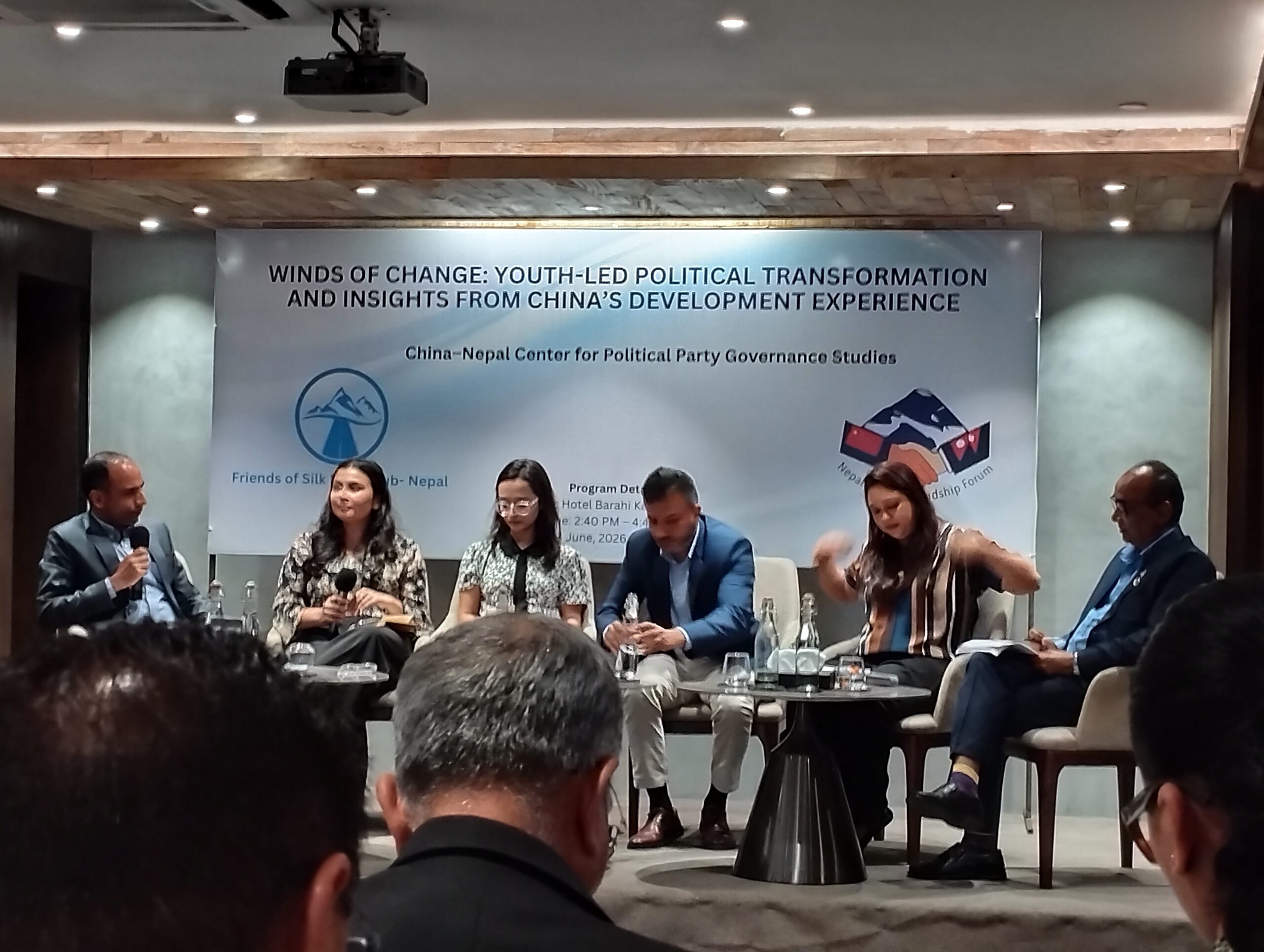
The Friends of Silk Road Club–Nepal, Nepal-China Friendship Forum in collaboration with the China–Nepal Center for Political Party Governance Studies, successfully organized a high-level dialogue program titled “Winds of Change: Youth-Led Political Transformation and Insights from China’s Development Experience” today at Hotel Barahi, Kathmandu.
The event brought together distinguished scholars, policy experts, youth leaders, and professionals to engage in an in-depth discussion on Nepal’s evolving political landscape, the rise of youth-led movements, and lessons from China’s development trajectory.
The session featured prominent speakers including Prof. Dr. Arjun Kumar Baral, Executive Director of CEDA; Ms. Apekshya Shah, Assistant Professor of International Relations and Diplomacy at Tribhuvan University; Dr. Jagdish Kumar Chhetri, Director of Nepal Geriatrics Center; Ms. Neha Dahal, development professional and entrepreneur; and Ms. Barsha Katuwal, business and community impact leader. The discussion was moderated in an interactive format, encouraging both expert insights and audience engagement.
Speakers emphasized that Nepal is currently undergoing a significant phase of political and social transformation driven by youth engagement. Prof. Dr. Baral highlighted that change is a continuous and inevitable process, noting that nations which adapt to evolving socio-political realities tend to achieve stronger development outcomes. Drawing comparisons with global and regional developments, he stressed the importance of institutionalizing reforms to sustain progress.
Ms. Apekshya Shah underscored that the recent youth-led movements in Nepal are not spontaneous but are rooted in long-standing dissatisfaction related to unemployment, slow economic growth, and governance challenges. She described the current wave as an “issue-based movement” reflecting a more informed and politically aware generation.
Dr. Jagdish Kumar Chhetri shared perspectives from his international experience, particularly in China, emphasizing the need for clear policy pathways, institutional support, and security for professionals to contribute effectively within Nepal. He stressed that structured systems and merit-based opportunities are crucial to reversing brain drain and encouraging knowledge return.
Youth representatives, including Ms. Neha Dahal and Ms. Barsha Katuwal, highlighted the growing political awareness among young people, driven by global exposure and digital connectivity. They emphasized the demand for transparency, accountability, and inclusive governance, while also acknowledging that Nepal is currently in a transitional phase where reforms are still evolving.
A key theme throughout the discussion was the importance of learning from China’s development model, particularly its focus on long-term planning, youth empowerment, rural development, and a balanced approach between state guidance and market mechanisms. Speakers noted that Nepal can adapt relevant aspects of such models while considering its unique socio-political context.
The program also addressed critical issues such as migration, skill gaps, institutional reform, and the role of social media in shaping political discourse. Participants emphasized the need for policies that incentivize youth participation, promote entrepreneurship, and create meaningful opportunities within the country.
In conclusion, the event highlighted a shared optimism about Nepal’s future, with speakers expressing confidence that if current momentum is supported by strong institutions, transparent governance, and youth-inclusive policies, the country can achieve significant progress in the coming decade.
The organizers reaffirmed their commitment to continuing such dialogues to foster informed discussions, strengthen Nepal–China cooperation, and empower youth voices in shaping the nation’s future.