

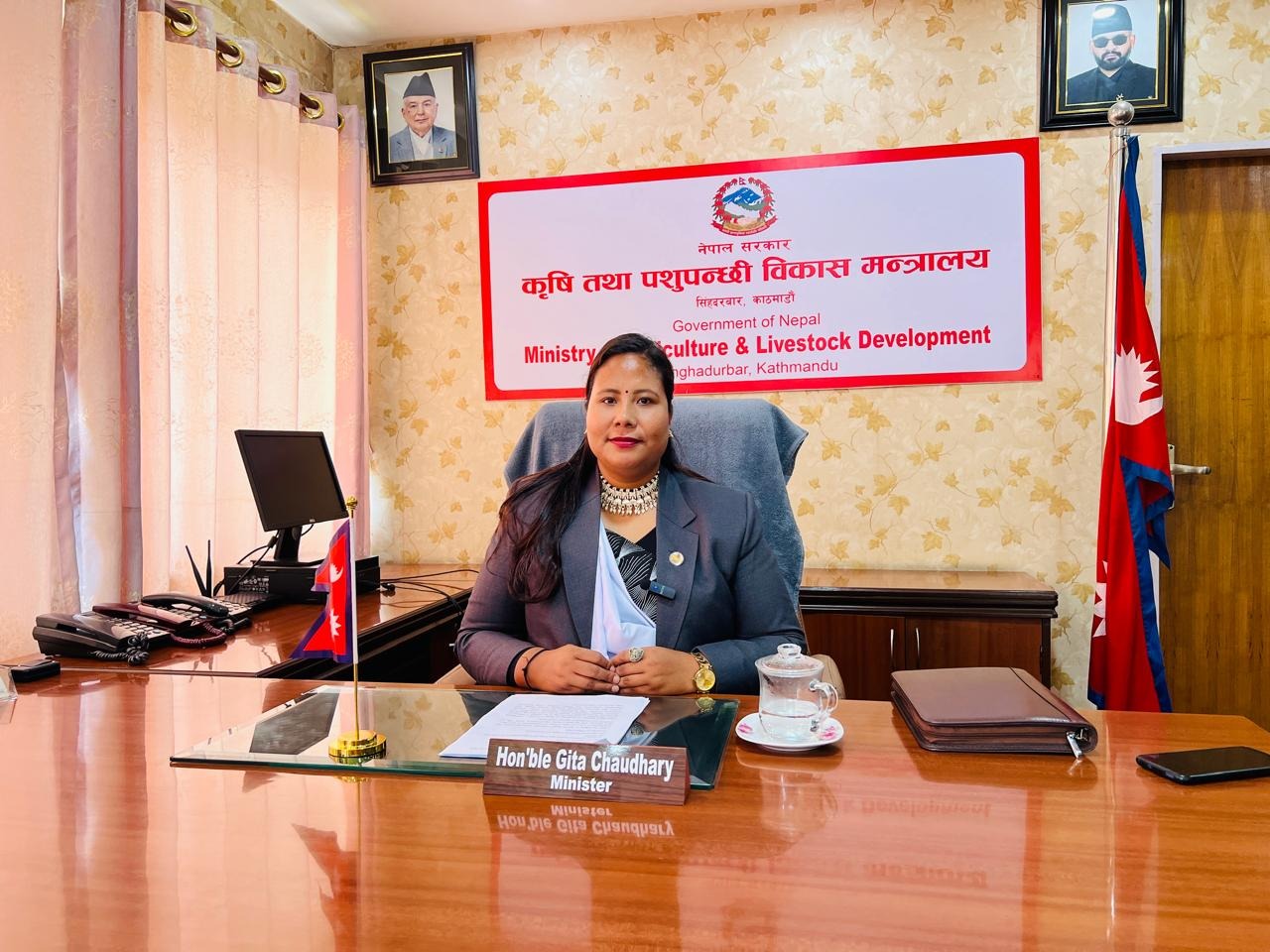
“Minister Gita Chaudhary calls for resilient, inclusive agrifood systems and stronger global cooperation”
Kathmandu, Nepal has amplified its call for climate-resilient and inclusive agricultural transformation on the global stage, as Minister for Agriculture and Livestock Development Gita Chaudhary addressed a high-level ministerial event during the 38th session of the Food and Agriculture Organization (FAO) Regional Conference for Asia and the Pacific.
Representing Nepal at the special session focused on agrifood systems in Small Island Developing States (SIDS), Least Developed Countries (LDCs), and Landlocked Developing Countries (LLDCs), Chaudhary underscored the country’s unique vulnerability as a mountainous and landlocked nation on the frontline of the climate crisis.
Climate Pressure Meets Structural Constraints
Highlighting Nepal’s geographic and economic realities, the minister emphasized that climate change is intensifying existing structural challenges in agriculture, from fragile supply chains to declining productivity.
“With increasing climate shocks, countries like Nepal face disproportionate risks despite minimal contribution to global emissions,” she noted, calling for urgent global attention to countries with compounded vulnerabilities.
LDC Graduation: A Critical Transition Point
Nepal is set to graduate from the Least Developed Country (LDC) category in November 2026—a milestone that signals economic progress but also raises concerns over reduced access to international support mechanisms.
Chaudhary warned that without strategic preparation, the transition could strain key sectors, particularly agriculture, which remains the backbone of rural livelihoods.
Five Strategic Priorities
The minister outlined Nepal’s roadmap for transforming its agrifood systems:
- Multi-hazard early warning systems to mitigate climate-induced disasters
- Empowerment of women and youth farmers to strengthen rural economies
- Improved access to climate finance for adaptation and resilience
- Digital innovation to ensure last-mile service delivery
- Agroecology-based production for sustainable and environmentally friendly farming
Call for Global Solidarity
Chaudhary also urged stronger South–South and Triangular Cooperation through the Food and Agriculture Organization, emphasizing knowledge sharing and joint solutions among countries facing similar development constraints.
Analysis: Policy Vision vs Implementation Challenge
Nepal’s intervention at the FAO forum reflects a forward-looking policy stance aligned with global sustainability goals. However, experts caution that translating these commitments into ground-level impact remains a persistent challenge.
Limited institutional capacity, financing gaps, and coordination issues continue to hinder effective implementation.
Conclusion: Nepal’s message at the FAO summit signals both urgency and ambition. As the country approaches its LDC graduation, the real test will lie in turning policy commitments into tangible outcomes for farmers on the ground.
The stakes are high: success could position Nepal as a model for climate-resilient agriculture among vulnerable nations—failure could widen existing inequalities in the sector.