

“Over 120 participants join high-level panel highlighting need for stronger coordination between UNCCD and UNFCCC agendas”
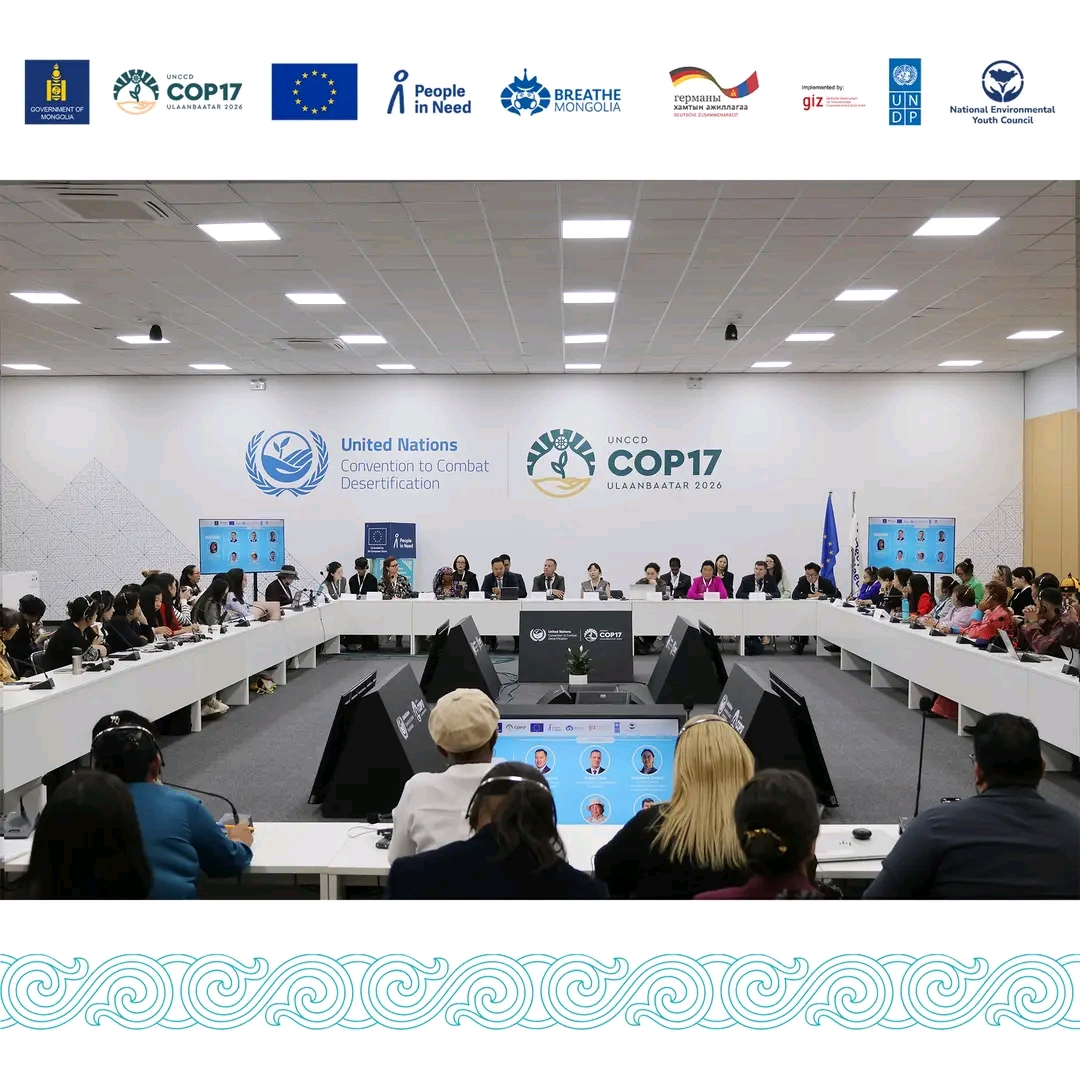
MONGOLIA: More than 120 participants attended an official side event at the 17th session of the United Nations Convention to Combat Desertification (UNCCD COP17), focusing on the role of civil society in strengthening synergies between global land and climate agendas.
Titled “The Role of Civil Society Organisations in Driving UNCCD and UNFCCC Synergies: A Perspective from Mongolia and Beyond,” the event brought together representatives from government, civil society, herder communities, youth organisations and international development partners.
The event was co-organised by People in Need (PIN) Mongolia, GIZ Mongolia, UNDP Mongolia, Breathe Mongolia – Clean Air Coalition NGO, and the National Environmental Youth Council (NEYC) under the EU-funded Twin Transition project.
Bridging global commitments with local action
The session opened with a fireside conversation between climate advocates Marie-Claire Graf and Hindou Oumarou Ibrahim, who discussed the importance of connecting international climate and land commitments with action at the community level.
The discussion underscored the need for greater alignment between the UNCCD and UNFCCC processes, particularly in addressing land degradation, climate change and the challenges faced by vulnerable communities.
A major highlight of the event was the presentation of the Mongolian Civil Society Joint Advocacy Statement to Munkhtamir Batbayar, Vice-Minister of Environment and Climate Change of Mongolia.
Receiving the statement, Batbayar emphasised the critical role of civil society in ensuring that national policies reflect realities and priorities on the ground.
Call for inclusive implementation
The high-level panel also drew attention to gaps between policy commitments and implementation, calling for more inclusive and coordinated approaches to land and climate action.
Participants stressed that stronger cooperation among governments, civil society organisations, local communities, youth and international partners will be essential to translating global commitments into meaningful local outcomes.
The discussions also highlighted the importance of ensuring that herder communities and other vulnerable groups have a meaningful voice in land and climate policymaking.
The organisers expressed appreciation to speakers, partners, co-organisers and participants for contributing to the discussion and helping build momentum from UNCCD COP17 toward UNFCCC COP31.
The event reinforced a central message: effective climate and land action requires not only ambitious international commitments, but also stronger civil society participation and locally grounded implementation.