

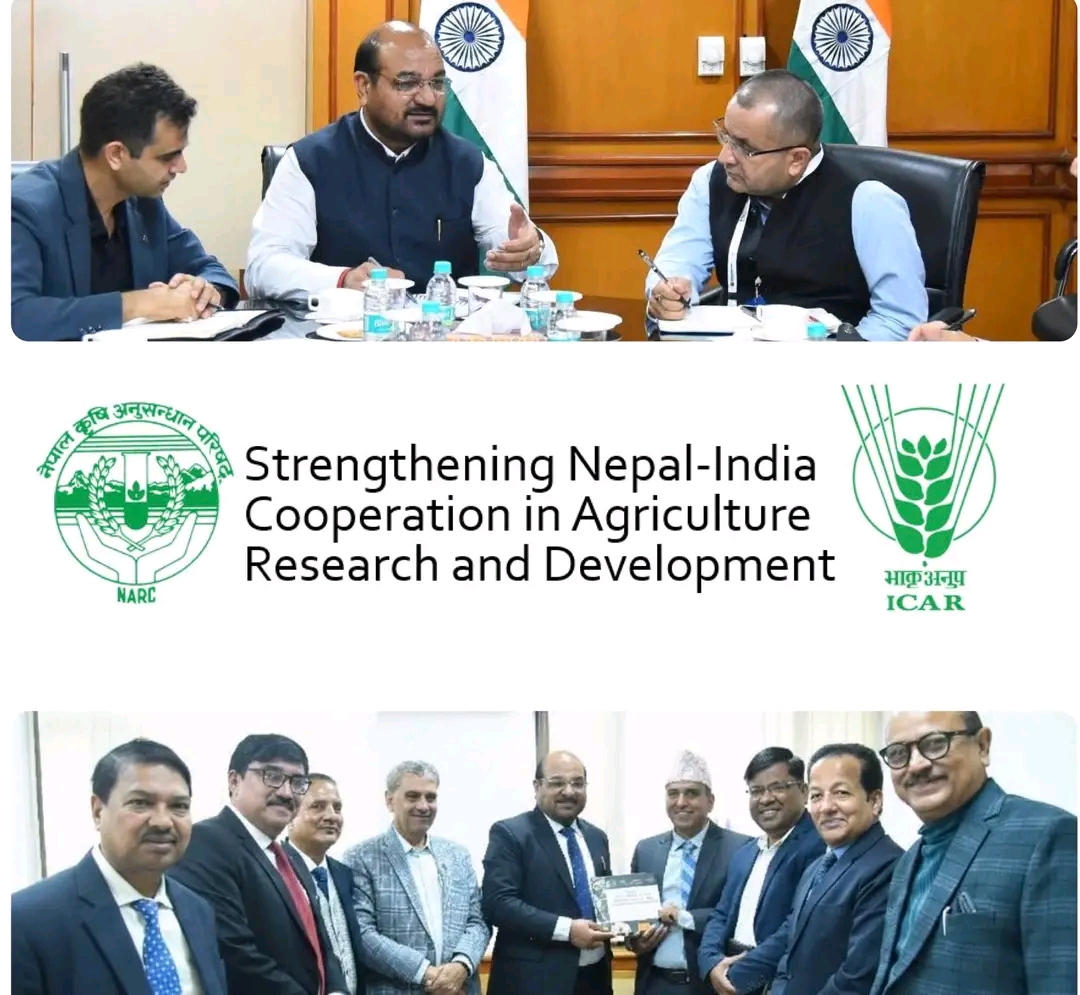
Kathmandu: At a time when climate volatility, shrinking arable land, and rising food demand are reshaping South Asia’s agricultural landscape, the newly signed workplan between the Nepal Agricultural Research Council and the Indian Council of Agricultural Research offers more than routine institutional collaboration—it signals a strategic recalibration of regional agricultural priorities.
Signed on February 5, 2026, the five-year framework (2026–2030) builds on longstanding cooperation between Nepal and India, but its emphasis on innovation, resilience, and knowledge exchange reflects a more urgent and future-oriented agenda.
Beyond Formality: Why This Workplan Matters
For decades, Nepal and India have shared ecological zones, crop systems, and agricultural challenges. Yet collaboration has often been episodic rather than programmatic. The new workplan attempts to bridge that gap by institutionalizing cooperation across four critical pillars:
- Joint Research and Innovation
- Exchange of Genetic Materials
- Knowledge and Technology Transfer
- Human Resource Development
This structured approach is designed to move beyond symbolic partnerships toward measurable outcomes—higher yields, climate-resilient crops, and improved livelihoods for farmers.
Climate Pressure and the Urgency of Collaboration
Agriculture in Nepal is at a crossroads. Increasingly erratic monsoons, prolonged droughts, and emerging pests are putting pressure on traditional farming systems. India faces similar stressors at scale.
By pooling research capacity, NARC and ICAR can accelerate the development of:
- Drought- and flood-tolerant crop varieties
- Climate-smart farming techniques
- Integrated pest and disease management systems
The exchange of genetic resources—often a sensitive and strategic area—could prove transformative if managed effectively. Access to diverse germplasm pools can significantly shorten the time needed to develop resilient crop varieties.
Science Diplomacy in Action
The workplan also reflects a broader trend: the rise of science diplomacy in South Asia. Rather than relying solely on political agreements, countries are increasingly leveraging research institutions to build long-term cooperation.
In this context, NARC and ICAR act as technical anchors, ensuring continuity even amid shifting political dynamics. The involvement of policymakers—particularly Nepal’s Ministry of Agriculture and Livestock Development—adds an important layer of alignment between research and national priorities.
Opportunities: From Lab to Field
One of the persistent challenges in agricultural research is translating laboratory breakthroughs into on-farm impact. The workplan’s focus on human resource development and knowledge sharing is crucial here.
Potential gains include:
- Capacity Building: Training Nepali scientists and extension workers in advanced research methods
- Technology Transfer: Adoption of precision agriculture tools and data-driven farming practices
- Market Linkages: Aligning production with regional demand and value chains
If implemented effectively, these elements could help bridge the gap between research institutions and farmers—a longstanding bottleneck in Nepal’s agricultural system.
Challenges: Implementation Will Be Key
While the framework is ambitious, its success will depend on execution. Key concerns include:
- Institutional Coordination: Ensuring smooth collaboration across agencies and borders
- Resource Allocation: Sustained funding for long-term research projects
- Equity in Knowledge Exchange: Avoiding one-sided benefits in technology and resource sharing
- Local Adaptation: Ensuring imported technologies are tailored to Nepal’s diverse agro-ecological zones
Without careful attention to these factors, even well-designed workplans risk remaining underutilized.
A Regional Model in the Making?
The ICAR–NARC partnership could serve as a template for broader regional cooperation in South Asia, where shared challenges demand collective solutions. With food security becoming an increasingly urgent issue, such frameworks may evolve into multi-country platforms in the future.
Conclusion: Planting the Seeds for a Resilient Future
The 2026–2030 workplan marks a significant step in redefining Nepal–India agricultural cooperation—from reactive engagement to proactive, research-driven partnership.
If backed by sustained commitment and effective implementation, this collaboration has the potential not only to boost productivity but also to reshape how the region approaches food security, sustainability, and innovation.
In a region where agriculture remains the backbone of livelihoods, the success of this partnership may ultimately be measured not in policy documents, but in healthier crops, resilient farms, and more secure rural communities.