


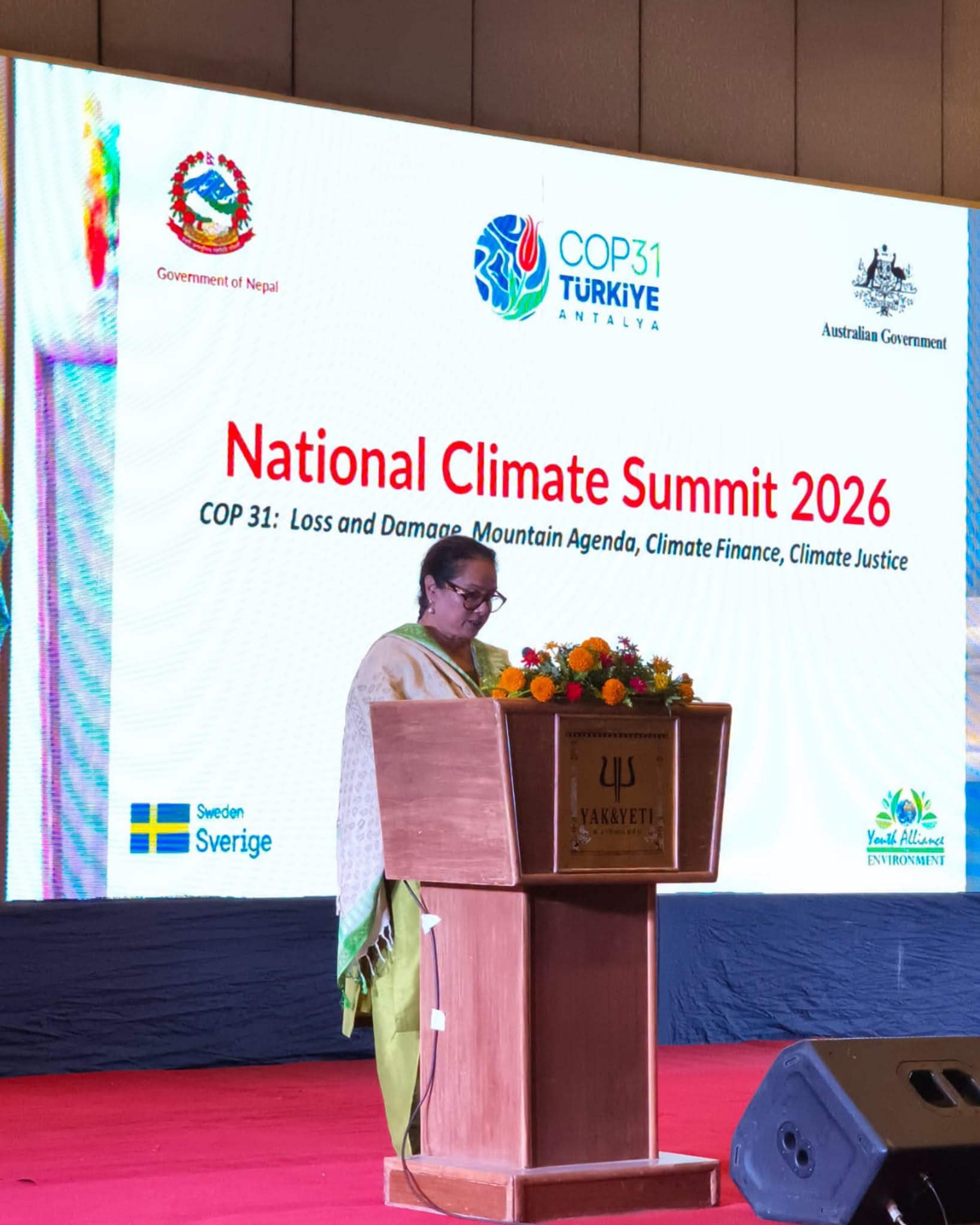
Kathmandu. The National Climate Summit 2026, organized by the Government of Nepal in collaboration with the Australian Embassy and Youth Alliance for Environment (YAE), emphasized the need to place children, young people, and climate-vulnerable communities at the heart of climate action.
Save the Children participated in the summit, which brought together government leaders, parliamentarians, development partners, climate experts, young people, and civil society representatives to advance Nepal’s climate agenda and strengthen collective efforts toward a climate-resilient future.
The summit was inaugurated by Rajendra Prasad Mishra of the Ministry of Agriculture, Forests and Environment (MOAFE). Minister for Agriculture, Forests and Environment Gita Chaudhary chaired the event, while Minister for Foreign Affairs Sisir Khanal attended as the chief guest.
Climate Priorities Ahead of COP31
As Nepal prepares for the 31st United Nations Climate Change Conference (COP31), the summit provided a platform to discuss national climate priorities, strengthen Nepal’s climate leadership, and enhance its engagement in international climate negotiations.
Discussions highlighted the importance of evidence-based, locally led, and inclusive climate action that responds to the needs of children, young people, and communities on the frontlines of the climate crisis.
Participants underscored the need to ensure that climate policies and programmes reflect local realities and that vulnerable communities have meaningful opportunities to participate in decisions affecting their lives and futures.
Save the Children Calls for Stronger Climate Finance
Speaking at the summit, Tara Chettry, Country Director of Save the Children Nepal and Bhutan, stressed that climate action must prioritize children, young people, and communities most affected by climate change.
She called for stronger climate finance, locally led solutions, and collective action to build a climate-resilient Nepal. She also emphasized that people experiencing the greatest impacts of climate change must have a meaningful role in shaping decisions that will determine their future.
The summit highlighted the importance of collaboration among government institutions, development partners, youth networks, and civil society to advance inclusive climate policies and strengthen climate resilience across Nepal.
Through its participation, Save the Children reaffirmed the importance of child-centred climate action and ensuring that the voices and priorities of children and young people are reflected in national climate planning and decision-making.