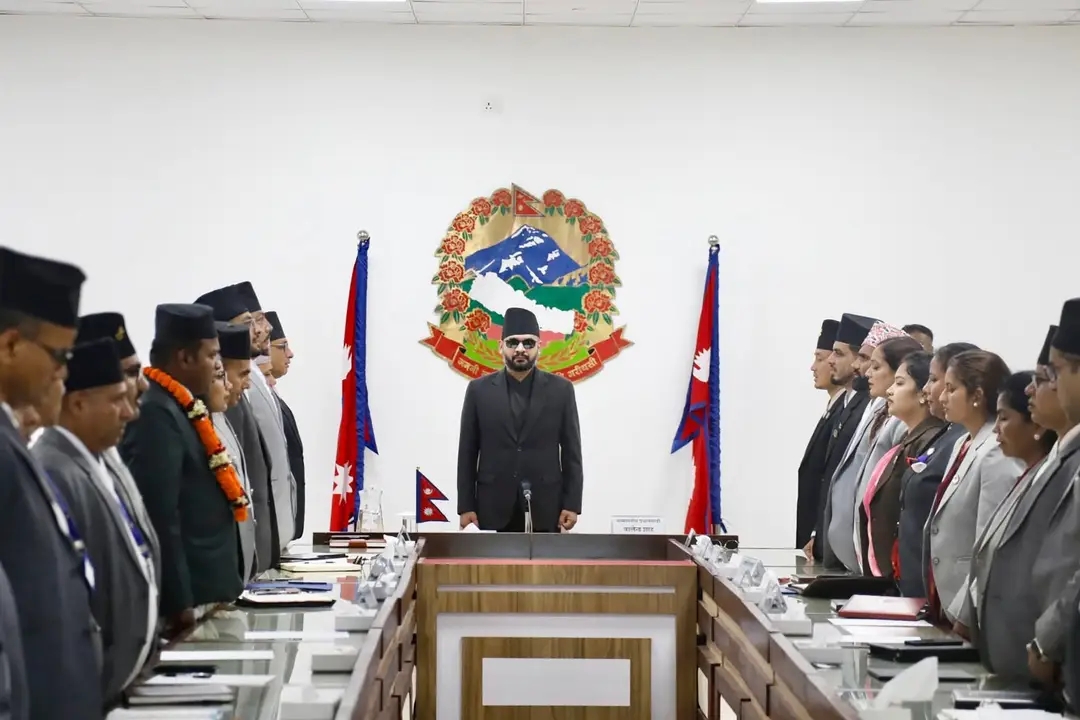


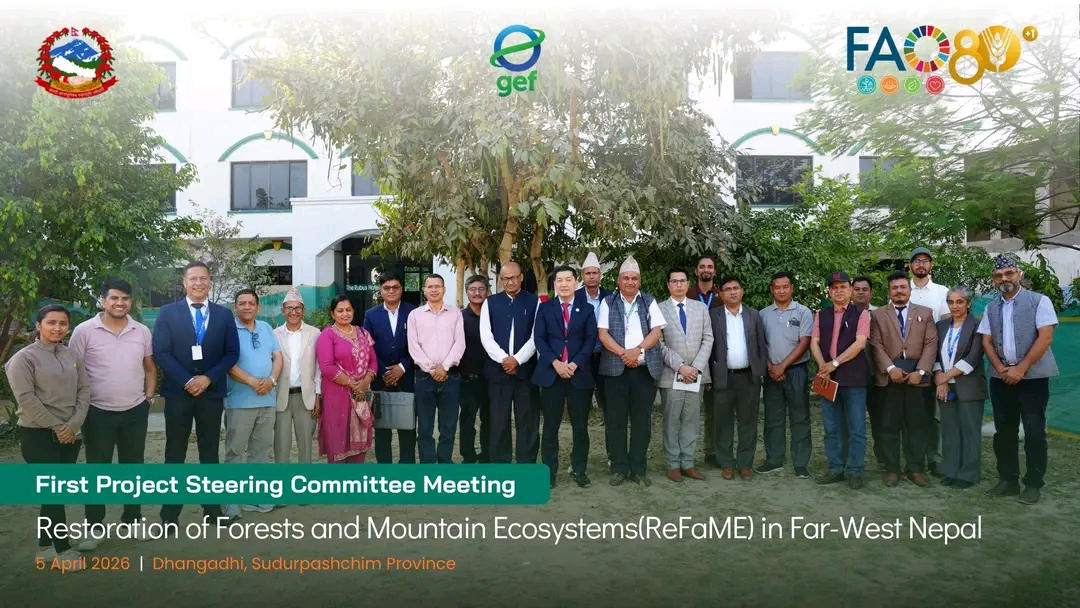
Kathmandu: The first Project Steering Committee (PSC) meeting of the Global Environment Facility (GEF)-funded ReFaME project was successfully convened in the presence of key stakeholders, marking an important milestone in steering the effective implementation of the initiative.
The meeting brought together representatives from government agencies, development partners, technical experts, and other concerned stakeholders to review the project’s strategic direction and establish a common understanding for its execution. The gathering served as a crucial platform to discuss the project’s overarching vision, expected outcomes, institutional arrangements, and the collaborative efforts required to ensure its successful delivery.
The ReFaME project, which focuses on the restoration of forests and mountain ecosystems in Far-West Nepal, is regarded as a significant intervention aimed at addressing environmental degradation, promoting ecological resilience, and supporting sustainable livelihoods in some of the country’s most ecologically sensitive and vulnerable landscapes.
During the meeting, participants were briefed on the overall project framework, including its objectives, thematic priorities, implementation strategy, and anticipated impacts. The project is expected to play a vital role in restoring degraded forest areas, improving watershed and mountain ecosystem health, enhancing biodiversity conservation, and contributing to climate resilience in targeted regions of Sudurpashchim Province.
A key highlight of the meeting was the endorsement of the project workplan, which lays the foundation for the coordinated implementation of planned activities over the coming period. Stakeholders reviewed major interventions, timelines, roles, and responsibilities, emphasizing the importance of timely action, effective coordination, and results-oriented execution.
Participants also stressed the need for strong inter-agency collaboration and local-level engagement to ensure that the project delivers meaningful and lasting outcomes. Discussions highlighted the importance of aligning project interventions with national and provincial priorities related to forest restoration, ecosystem management, climate adaptation, and community development.
The meeting further underscored the significance of multi-stakeholder partnership in addressing complex environmental challenges, particularly in fragile mountain and forest ecosystems where degradation, climate impacts, and unsustainable land-use practices continue to pose serious threats. Stakeholders agreed that a coordinated and inclusive implementation approach would be essential to maximize the project’s impact and sustainability.
Officials and participants expressed confidence that the ReFaME project would contribute not only to the restoration of critical ecosystems but also to strengthening the resilience of local communities that depend on forests and natural resources for their livelihoods. The project is also expected to generate lessons and best practices that can support broader ecosystem restoration and conservation efforts across Nepal.
The successful completion of the first PSC meeting is being viewed as a strong starting point for the ReFaME project, setting the stage for enhanced coordination, shared ownership, and strategic guidance among all implementing and supporting partners.
With the endorsement of the workplan and a shared commitment from stakeholders, the project now moves forward with renewed momentum toward its goal of restoring and protecting the valuable forest and mountain ecosystems of Far-West Nepal.